
Why Russia Is Importing Petrol from India.
Introduction
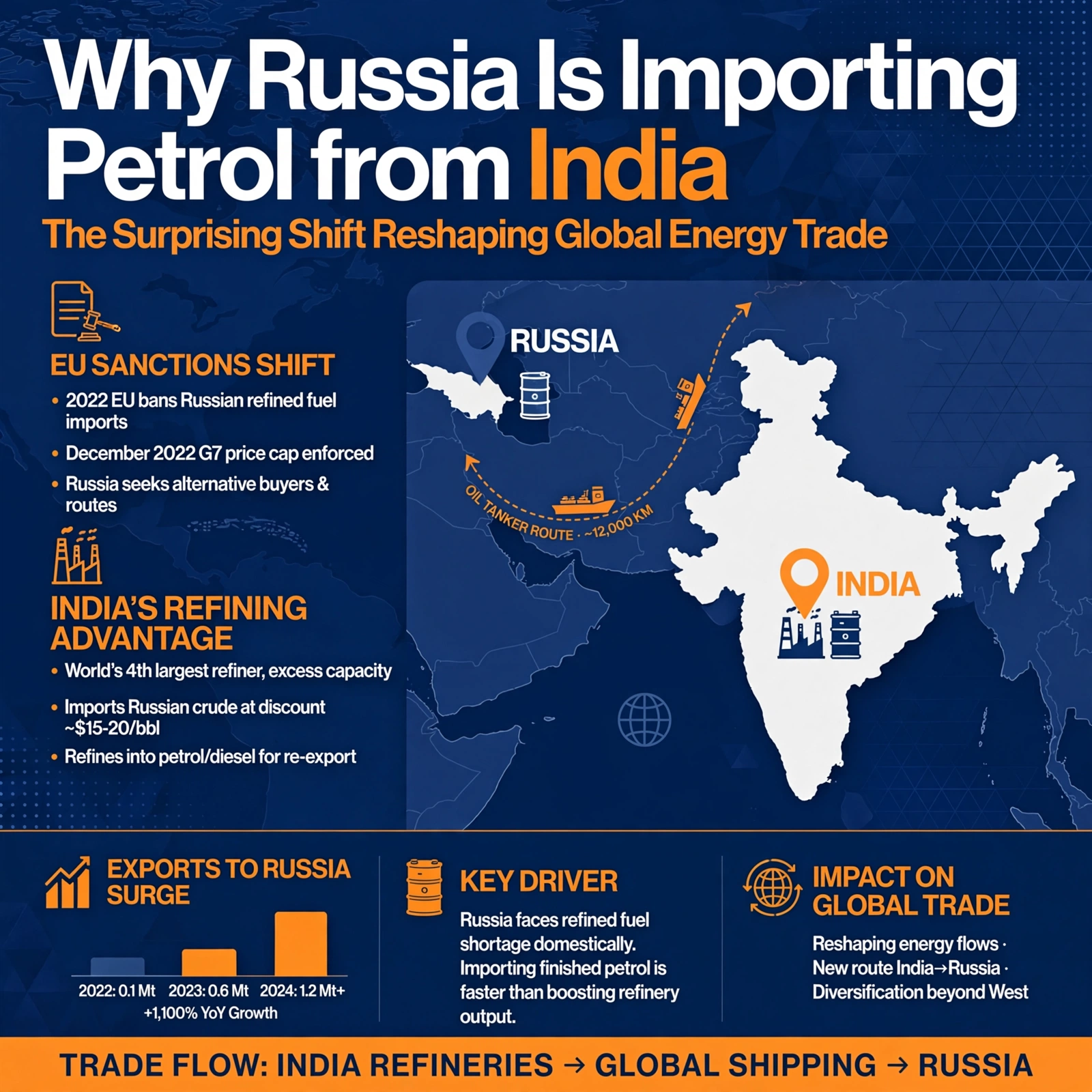
In one of the most unexpected developments in the global energy market, Russia—a country known as one of the world's largest oil producers and exporters—has started importing petrol (gasoline) from India. The move has surprised energy analysts, policymakers, and traders because Russia traditionally exports petroleum products rather than importing them.
The development highlights how geopolitical conflicts, attacks on critical infrastructure, and changing global trade patterns can dramatically alter established energy relationships. What makes this story even more remarkable is that India is importing large quantities of crude oil from Russia, refining it, and then exporting petrol back to Russia.
This unusual trade flow demonstrates the growing importance of India's refining sector and the increasing complexity of global energy markets.
Why Is Russia Importing Petrol?
The primary reason behind Russia's petrol imports is the disruption of its domestic refining capacity.
Over the past year, repeated Ukrainian drone attacks and military strikes have targeted Russian oil refineries and energy infrastructure. These attacks have reduced refining operations at several facilities, leading to fuel shortages in some regions of Russia. As a result, Moscow has been forced to seek alternative sources of refined fuel to maintain domestic supplies.
Although Russia continues to produce massive amounts of crude oil, converting that crude into petrol, diesel, and other refined products has become more difficult due to refinery disruptions. This situation has created the unusual scenario of an oil-rich nation importing fuel.
The First Indian Petrol Shipment
According to shipping and trade data, Russia recently received its first shipment of gasoline from India. Reports indicate that approximately 350,000 barrels of petrol arrived in Russia, with additional cargoes expected in the coming weeks.
Energy market observers described the arrival of Indian fuel in Russia as a significant moment because it marks a major shift in traditional energy trade routes. For decades, Russia has primarily been an exporter of petroleum products.
The fact that Russian buyers are now sourcing petrol from India demonstrates the severity of refinery-related supply challenges.
How the India-Russia Oil Cycle Works
To understand this development, it is important to understand the relationship between crude oil and refined products.
Step 1: Russia Exports Crude Oil
Russia remains one of India's largest crude oil suppliers. Since 2022, India has significantly increased purchases of discounted Russian crude oil. In 2026, Indian imports of Russian crude reached record levels.
Step 2: Indian Refineries Process the Oil
India possesses some of the world's most advanced refining infrastructure. Large refining complexes in Gujarat and other states process millions of barrels of crude oil into valuable products such as:
Petrol (Gasoline)
Diesel
Aviation Fuel
LPG
Petrochemical Feedstocks
Indian refiners purchase crude oil, refine it efficiently, and then export the finished products worldwide.
Step 3: Refined Fuel Returns to Russia
Because some Russian refineries have been damaged or are operating below capacity, Russia has begun purchasing refined products from external suppliers, including India.
In simple terms:
Russia sells crude oil → India refines it → India sells petrol → Russia buys petrol.
This circular trade pattern would have seemed highly unlikely just a few years ago.
Ukraine's Impact on Russia's Energy Sector
The Russia-Ukraine conflict has increasingly targeted energy infrastructure.
While crude oil production remains relatively resilient, refineries are more vulnerable because they are fixed facilities that cannot easily be relocated. Attacks on refineries can reduce fuel output even when crude oil production remains strong.
Energy experts note that refinery disruptions have become one of the most effective ways to create economic pressure because they affect:
Domestic fuel availability
Transportation systems
Industrial production
Agricultural operations
Export revenues
As a result, Russia has had to adjust its fuel supply strategy by seeking imports from friendly trading partners.
Why India Is a Natural Supplier
Several factors make India an ideal supplier of petrol to Russia.
Massive Refining Capacity
India ranks among the world's leading refining hubs. Its refineries can process a wide variety of crude oils and produce high-quality petroleum products for export.
Strong Trade Relationship
India and Russia have significantly expanded energy cooperation over the past few years. Russian crude oil exports to India have increased substantially, creating strong commercial links between the two countries.
Export Infrastructure
Indian ports and refineries already handle large volumes of international energy trade. This allows Indian companies to quickly respond to new market opportunities.
Competitive Pricing
Indian refiners benefit from access to discounted crude oil and efficient refining operations, making their products competitive in global markets.
Economic Benefits for India
The development offers several advantages for India.
Increased Export Revenue
Selling refined petroleum products generates higher value than simply trading crude oil. Refineries earn additional revenue through the refining process.
Strengthening India's Position as a Global Refining Hub
The ability to supply fuel even to major oil-producing nations demonstrates India's growing importance in global energy markets.
Job Creation and Industrial Growth
Higher refinery utilization supports employment, logistics operations, shipping services, and associated industries.
Strategic Influence
Energy exports increase India's economic and geopolitical influence by strengthening relationships with major trading partners.
Challenges and Risks
Despite the opportunities, there are challenges.
Geopolitical Sensitivities
Energy trade involving Russia remains closely monitored by Western countries because of sanctions and the ongoing conflict in Ukraine.
Shipping Costs
Transporting petrol from India to Russia involves long shipping routes, increasing logistics expenses. The fact that Russia is willing to bear these costs highlights the seriousness of its fuel shortages.
Market Volatility
Global oil prices, sanctions policies, and military developments can quickly change market conditions.
Refinery Maintenance
India must balance export opportunities with domestic fuel demand to ensure adequate supplies for its own economy.
What This Means for Global Energy Markets
The Russia-India petrol trade demonstrates how global energy systems are evolving.
Traditionally:
Oil-producing nations exported fuel.
Importing nations bought energy products.
Today, the situation is more complex.
Countries with advanced refining capabilities can become crucial suppliers even to major oil producers. Refining capacity is becoming just as important as crude oil production itself. Analysts increasingly view refinery availability as one of the key factors shaping future energy security.
The situation also illustrates how modern conflicts can reshape trade routes, supply chains, and international partnerships.
Future Outlook
Industry experts expect additional shipments of Indian petrol to Russia if refinery disruptions continue. Reports indicate that more cargoes may arrive in the coming months as Russia seeks to stabilize domestic fuel supplies.
At the same time, Russia is attempting to restore damaged refining facilities and improve fuel availability. The long-term future of these imports will depend on:
The progress of refinery repairs.
Developments in the Russia-Ukraine conflict.
Global fuel demand.
International sanctions.
Oil market conditions.
Conclusion
Russia's decision to import petrol from India represents one of the most fascinating developments in the energy sector in 2026. A nation famous for exporting oil is now purchasing refined fuel from a country that imports its crude. This unusual trade flow highlights the growing importance of refining capacity, the impact of geopolitical conflicts on energy infrastructure, and India's emergence as a major global refining powerhouse.
As energy markets continue to evolve, the Russia-India petrol trade serves as a powerful example of how modern supply chains can adapt to unexpected disruptions. What once seemed impossible has become a reality: Russia is buying petrol from India, and the world is watching closely.