
Trump America First Doctrine and Its Impact on Global Wars
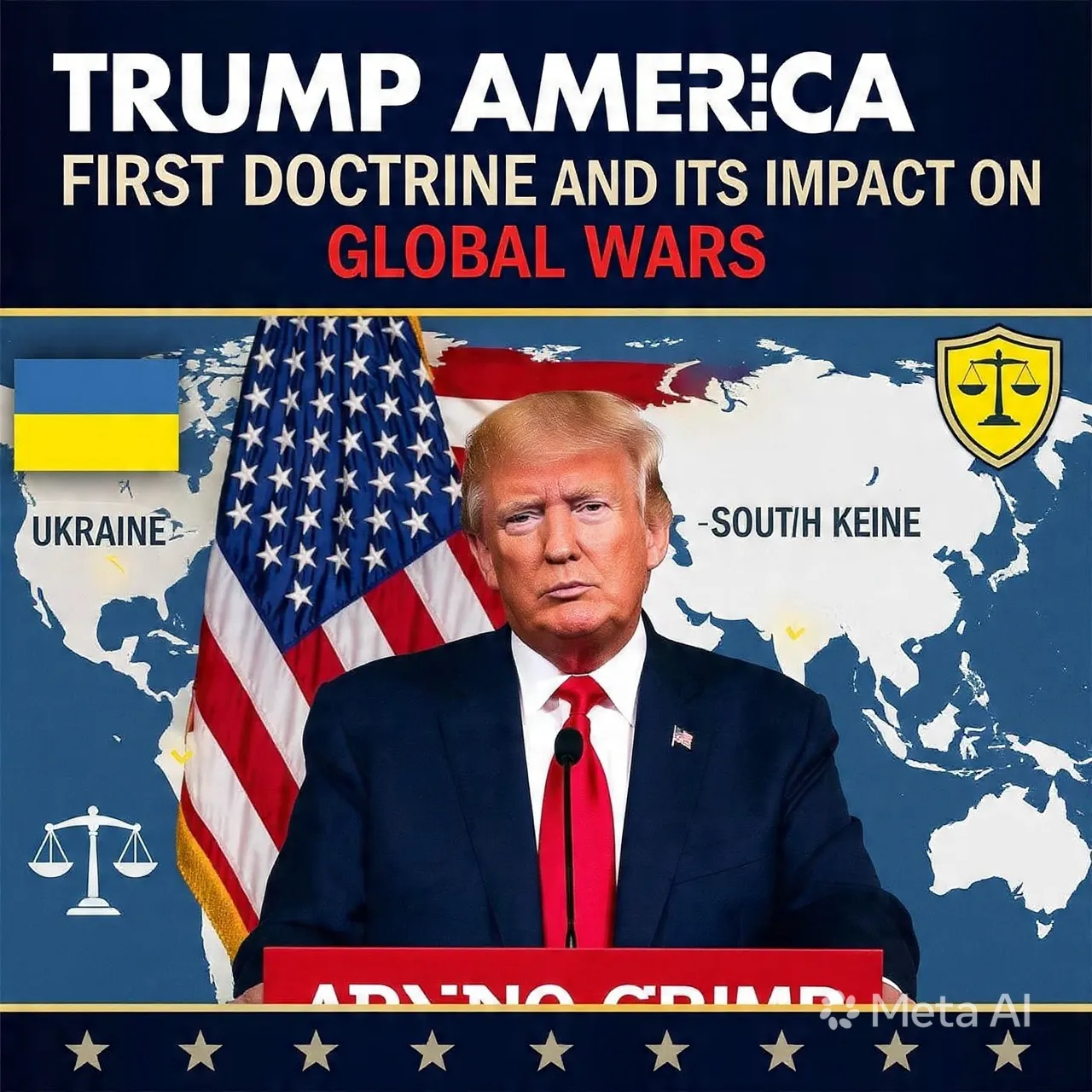
The return of Donald Trump to the White House has revived one of the most debated foreign policy philosophies of the 21st century: the “America First” doctrine. Supporters view it as a realist recalibration of U.S. global commitments; critics describe it as a destabilizing retreat from international leadership.
In the context of ongoing global wars — including the conflict between Russia and Ukraine, escalating tensions between Israel and Iran, and rising strategic competition with China — the “America First” doctrine has significant implications for global stability.
This article provides a detailed examination of the doctrine’s origins, principles, operational impact on modern conflicts, strategic benefits, risks, and long-term geopolitical consequences.
1. What Is the “America First” Doctrine?
“America First” is not merely a slogan; it represents a structural shift in U.S. grand strategy. The doctrine emphasizes:
-
National sovereignty over multilateral commitments
-
Reduced foreign military entanglements
-
Burden-sharing in alliances
-
Economic nationalism
-
Strategic deterrence without prolonged intervention
At its core, it reflects a realist approach to international relations — prioritizing tangible national interests over ideological or humanitarian interventions.
2. Core Strategic Pillars of America First
A. Selective Engagement
Under this doctrine, the U.S. does not automatically intervene in every international conflict. Military action must demonstrate direct national interest.
B. Alliance Rebalancing
Trump has repeatedly questioned the cost structure of NATO and other alliances, arguing that European and Asian partners must increase defense spending rather than rely heavily on U.S. military guarantees.
C. Economic Leverage as Foreign Policy
Tariffs, sanctions, and trade negotiations are central tools. Rather than relying solely on military deployments, economic pressure is used to influence adversaries.
D. Strong Deterrence, Limited Occupation
The doctrine favors swift, decisive military action if required — but rejects prolonged nation-building or open-ended wars.
3. Impact on the Russia–Ukraine War
The Russia–Ukraine conflict provides a clear test case.
Under an America First framework:
-
U.S. military aid is reassessed based on cost-benefit analysis.
-
Diplomatic pressure for negotiated settlement increases.
-
European allies are expected to assume greater financial and military responsibility.
Strategic Impact
-
Reduced Open-Ended Commitment
America First discourages indefinite military funding without measurable strategic gains. -
Incentive for Negotiation
By signaling limits to U.S. involvement, Washington may push Kyiv and Moscow toward diplomatic compromise. -
European Strategic Autonomy
NATO states increase defense budgets to compensate for uncertain long-term U.S. backing.
However, critics argue that perceived reduction in U.S. support may embolden Moscow.
4. Impact on the Israel–Iran Conflict
In the Middle East, America First operates differently.
While the doctrine promotes reduced global policing, it strongly supports Israel as a strategic ally. Therefore:
-
Military backing for Israel remains robust.
-
Iran faces economic sanctions and strategic deterrence.
-
Direct U.S. ground involvement remains limited unless American assets are threatened.
Strategic Contradiction?
Some analysts argue that strong backing of Israel while reducing other commitments creates asymmetry. Supporters counter that Israel represents a clear national security interest, unlike peripheral conflicts.
5. Implications for U.S.–China Strategic Competition
America First also reshapes great-power rivalry.
Rather than military escalation, Trump’s doctrine emphasizes:
-
Trade pressure
-
Technological decoupling
-
Military deterrence in the Indo-Pacific
-
Strategic unpredictability
In potential flashpoints such as Taiwan, America First favors deterrence without provocation — maintaining military strength while avoiding formal commitments that could drag the U.S. into full-scale war.
6. Does America First Reduce Global Wars?
This is the central debate.
Argument: It Reduces Wars
Supporters claim:
-
Fewer U.S. interventions reduce global resentment.
-
Clear red lines deter adversaries.
-
Burden-sharing strengthens allied responsibility.
-
Economic tools avoid military escalation.
Under this view, overextension causes wars; restraint prevents them.
Argument: It Increases Instability
Critics argue:
-
Reduced U.S. engagement creates power vacuums.
-
Adversaries test perceived weakness.
-
Alliance uncertainty destabilizes deterrence structures.
-
Transactional diplomacy weakens long-term trust.
Under this perspective, U.S. global leadership historically maintained order; retrenchment disrupts balance.
7. Military Spending and Defense Strategy
America First does not mean military weakness. In fact:
-
Defense budgets often increase.
-
Emphasis shifts to modernization — drones, AI, missile defense.
-
Focus moves from counterinsurgency to great-power competition.
This marks a transition from post-9/11 counterterrorism wars to strategic rivalry with major states.
8. Economic Consequences in Wartime Context
Global wars disrupt supply chains, energy markets, and trade routes.
America First responds by:
-
Prioritizing domestic manufacturing.
-
Reducing dependency on foreign supply chains.
-
Using tariffs strategically.
While this strengthens domestic resilience, it may accelerate global economic fragmentation.
9. Domestic Political Dimension
The doctrine resonates with segments of the American electorate who are:
-
War-weary after Iraq and Afghanistan
-
Concerned about national debt
-
Focused on domestic economic revival
Thus, foreign policy becomes closely tied to domestic political legitimacy.
10. Long-Term Geopolitical Effects
The long-term consequences of America First may include:
A Multipolar World
Reduced U.S. intervention accelerates power redistribution among regional actors.
Stronger Regional Blocs
Europe, the Middle East, and Asia may develop more autonomous defense frameworks.
Strategic Unpredictability
Trump’s negotiation style — often described as transactional — introduces uncertainty that can both deter adversaries and unsettle allies.
11. Historical Comparison
Compared to post-World War II liberal internationalism, America First represents a shift from:
-
Global institution-building
to -
Sovereignty-centered realism
It challenges decades of bipartisan consensus about America’s role as the “indispensable nation.”
12. Final Assessment
Trump’s “America First” doctrine is neither purely isolationist nor traditionally interventionist. It is a recalibration of U.S. power — favoring strategic selectivity, economic leverage, and deterrence over broad global engagement.
Its impact on global wars depends on perspective:
-
It may reduce unnecessary military entanglements.
-
It may compel allies to become more self-reliant.
-
It may, however, increase uncertainty in volatile regions.
In a world already shaped by conflicts in Eastern Europe, the Middle East, and the Indo-Pacific, the doctrine reshapes how the United States influences war and peace.
Whether it ultimately stabilizes or destabilizes the global order will depend on how effectively deterrence, diplomacy, and alliance management are balanced in practice.