
The Earth Prize 2026
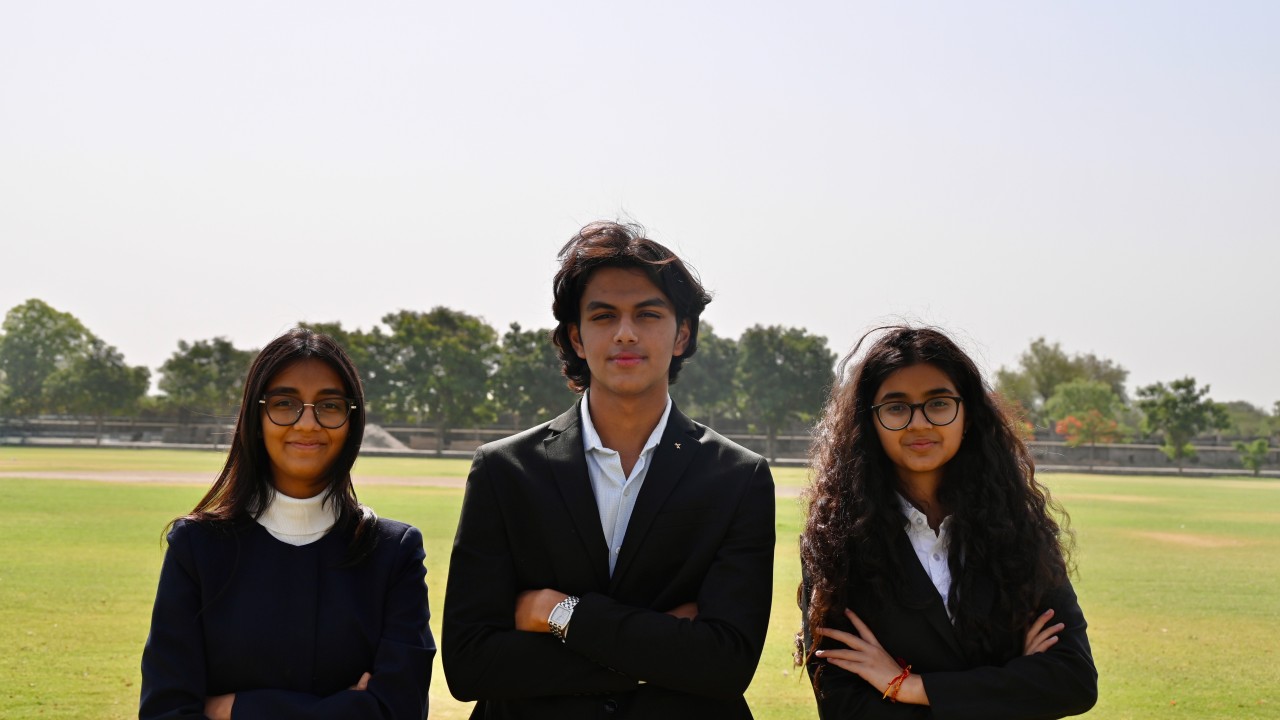
How Three Indian Teenagers Created Plas-Stick to Fight Microplastic Pollution
Introduction
In a remarkable example of youth-led innovation, three Indian teenagers captured global attention by winning The Earth Prize 2026, one of the world's most prestigious environmental competitions for young people. Their invention, called Plas-Stick, offers a simple, affordable, and environmentally friendly solution to one of the fastest-growing environmental challenges of our time: microplastic contamination in water.
The winning team consists of Vivaan Chhawchharia, Ariana Agarwal, and Avyana Mehta, all 16 years old. Their innovative approach uses discarded tamarind seeds to remove microplastics from contaminated water, demonstrating how local resources can be transformed into solutions for global problems.
What Is The Earth Prize?
The Earth Prize is an international environmental sustainability competition designed for students aged 13 to 19. Founded by The Earth Foundation in Geneva, Switzerland, the competition encourages young innovators to develop practical solutions for environmental challenges. Winning teams receive funding, mentorship, and international recognition to help transform their ideas into real-world impact.
The competition attracts thousands of participants from more than 160 countries and territories, making it one of the most competitive youth environmental awards in the world.
The Growing Problem of Microplastics
Microplastics are tiny plastic particles smaller than 5 millimeters. They originate from broken plastic waste, synthetic clothing fibers, packaging materials, and industrial products. These particles are now found in rivers, oceans, soil, food, and even drinking water.
Scientists have raised concerns about the long-term impact of microplastics on ecosystems and human health. Removing them from water is often difficult because they are extremely small and require expensive filtration technologies.
How the Idea Was Born
The inspiration for Plas-Stick came when the students visited rural communities and observed that many families lacked access to advanced water purification systems. They realized that expensive filtration technologies were not practical for many households and began searching for a low-cost alternative.
Their goal was simple:
Use locally available materials.
Keep production costs low.
Avoid dependence on electricity.
Create an environmentally safe solution.
Make clean water accessible to more people.
This challenge led them to an unlikely ingredient: waste tamarind seeds.
What Is Plas-Stick?
Plas-Stick is a biodegradable powder created from discarded tamarind seeds. When added to water, the powder attracts microplastic particles and causes them to cluster together into larger masses. These larger clusters become much easier to remove from the water.
The innovation is particularly noteworthy because it relies on agricultural waste rather than expensive synthetic chemicals. By converting a commonly discarded material into a useful environmental solution, the students created a sustainable and circular approach to pollution control.
How Plas-Stick Works
The process is relatively straightforward:
Tamarind seed powder is added to contaminated water.
The powder binds with microplastic particles.
The particles clump together into larger masses.
The resulting clusters can be removed, including through magnetic separation methods developed as part of the solution.
Cleaner water remains behind.
Because the method requires no electricity and minimal infrastructure, it has the potential to be used in both urban and rural settings.
Why Plas-Stick Is Different
Many existing microplastic removal systems depend on:
Expensive filtration equipment
Industrial treatment plants
High energy consumption
Specialized maintenance
Plas-Stick offers several advantages:
Low Cost
The raw material, tamarind seeds, is widely available and often treated as waste.
Eco-Friendly
The product is biodegradable and does not introduce harmful chemicals into the environment.
Accessible
The technology can potentially be used in communities with limited infrastructure.
Sustainable
It promotes the reuse of agricultural waste while addressing water pollution.
Winning The Earth Prize 2026
After developing and testing their solution, the team entered The Earth Prize 2026 competition. Their project impressed judges because it addressed a global environmental problem with a practical, scalable, and affordable solution.
The students were eventually named Global Winners of The Earth Prize 2026, becoming the first Indian team to achieve this distinction. Their success brought international recognition not only to the team but also to India's growing culture of scientific innovation among young people.
Potential Global Impact
Microplastic pollution affects virtually every country in the world. As awareness grows, demand for affordable removal technologies is expected to increase.
If successfully scaled, Plas-Stick could potentially be used in:
Household water treatment
Community water systems
Rural drinking water projects
Educational environmental programs
Developing countries with limited filtration infrastructure
The invention demonstrates that impactful environmental solutions do not always require complex technology. Sometimes innovation begins with understanding local problems and creatively using available resources.
Inspiring the Next Generation
The success of Vivaan Chhawchharia, Ariana Agarwal, and Avyana Mehta sends a powerful message to young innovators around the world. Their achievement proves that age is not a barrier to solving major environmental challenges.
By combining scientific curiosity, environmental awareness, and determination, these teenagers transformed a simple school project into an internationally recognized solution with the potential to improve water quality for millions of people.
Conclusion
The Earth Prize 2026 showcased the power of youth innovation through the remarkable success of Plas-Stick. Using waste tamarind seeds, three Indian teenagers developed a biodegradable and cost-effective method to remove microplastics from water, earning global recognition and making history as the first Indian team to win the competition. Their achievement highlights the importance of sustainable thinking, scientific creativity, and community-focused problem solving.
As the world continues to search for solutions to environmental challenges, stories like Plas-Stick remind us that some of the most powerful ideas can come from young minds determined to make a difference.