
AI and WhatsApp Automation for Business
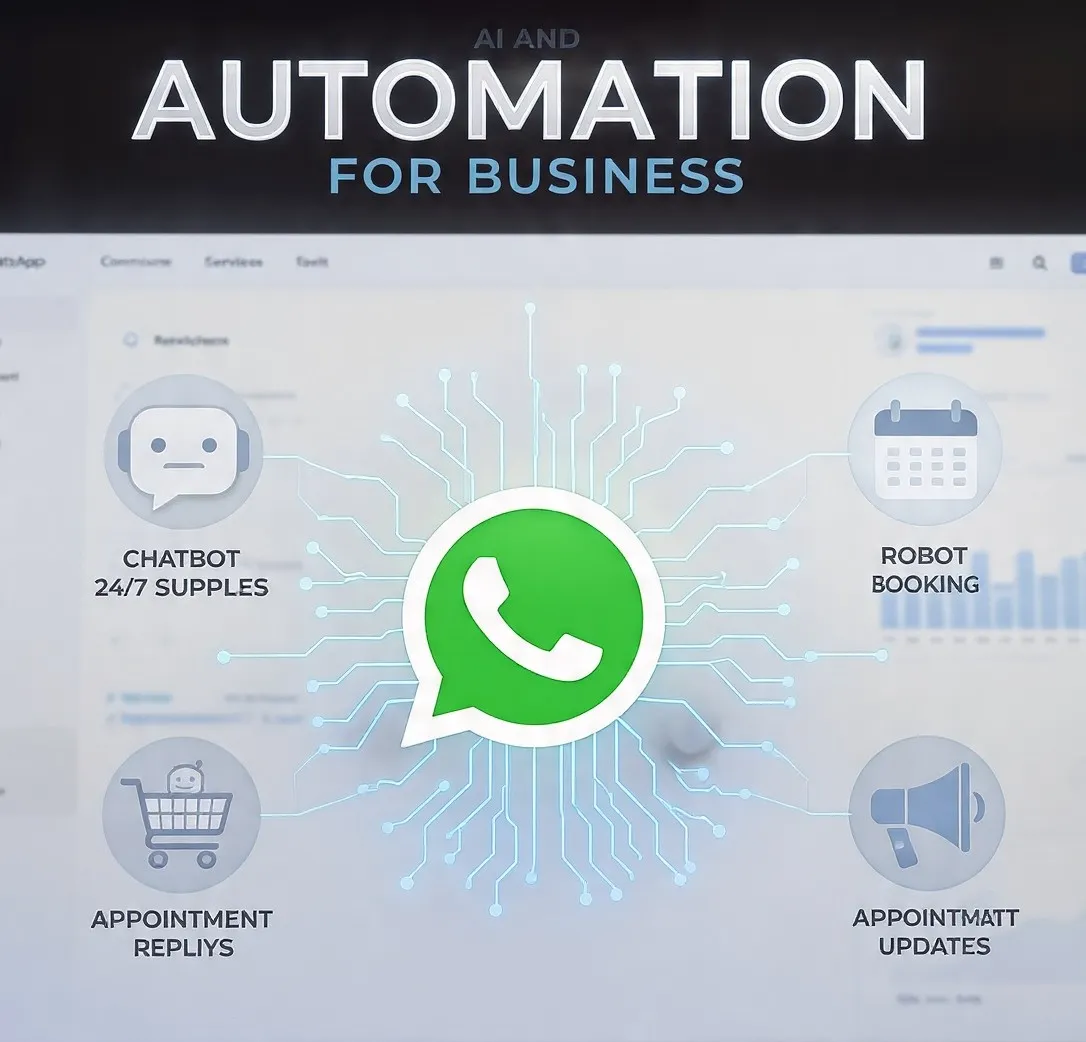
In the rapidly evolving digital economy, businesses are shifting toward automation to improve efficiency, reduce costs, and deliver better customer experiences. One of the most powerful combinations driving this transformation is Artificial Intelligence (AI) integrated with WhatsApp automation.
With over 2 billion users worldwide, WhatsApp has become a primary communication channel for businesses, especially in India. When combined with AI technologies, it can automate customer support, lead generation, sales, and engagement—without requiring constant human intervention.
This guide explains everything you need to know about AI + WhatsApp automation and how to implement it effectively in your business.
What is AI + WhatsApp Automation?
AI + WhatsApp automation refers to using intelligent systems such as chatbots, natural language processing, and workflow automation to handle conversations and tasks on WhatsApp.
Instead of manually replying to every message, businesses can use AI-powered bots to:
- Answer customer queries instantly
- Send automated replies and notifications
- Capture and qualify leads
- Provide product recommendations
- Process orders and bookings
This is typically done using the WhatsApp Business API, which allows integration with external systems and automation tools.
Why Businesses in India Are Adopting WhatsApp Automation
1. Massive User Base
India has one of the largest WhatsApp user bases in the world, making it an ideal platform for reaching customers directly.
2. High Open Rates
Messages on WhatsApp have significantly higher open and response rates compared to emails or SMS.
3. Cost-Effective Communication
Automation reduces the need for large customer support teams.
4. Real-Time Engagement
Customers prefer instant replies, which AI can deliver 24/7.
Key Use Cases of AI + WhatsApp Automation
1. Customer Support Automation
AI chatbots can handle frequently asked questions such as:
- Product details
- Pricing information
- Order status
- Return policies
Tools powered by AI models like ChatGPT can understand natural language and provide human-like responses.
Example:
A customer asks, “Where is my order?”
The bot instantly checks the system and replies with tracking details.
2. Lead Generation and Qualification
WhatsApp automation can be used to:
- Capture user details (name, phone, requirement)
- Ask qualifying questions
- Segment leads based on interest
This helps businesses focus only on high-quality leads.
3. Sales and Product Recommendations
AI can analyze user behavior and suggest relevant products.
Example:
- If a user asks about shoes, the bot can recommend best-selling products
- Send images, prices, and purchase links
4. Appointment Booking and Reminders
Businesses such as clinics, salons, and consultants can:
- Automate booking confirmations
- Send reminders
- Reduce no-shows
5. Order Processing and Updates
E-commerce businesses can:
- Confirm orders
- Send payment links
- Provide delivery updates
6. Marketing and Broadcast Campaigns
Using automation, businesses can send:
- Promotional messages
- Offers and discounts
- Festival campaigns
However, this must comply with WhatsApp policies.
Tools and Platforms for WhatsApp Automation
WATI
A popular platform in India for WhatsApp automation.
Features:
- No-code chatbot builder
- Broadcast messaging
- CRM integration
Twilio
A global communication API platform.
Features:
- Developer-friendly APIs
- Scalable messaging solutions
- Integration with AI tools
Zoko
Focused on e-commerce businesses.
Features:
- Sales automation
- Order tracking
- Customer engagement tools
Interakt
Designed for small and medium businesses in India.
Features:
- Shared team inbox
- Automated replies
- Campaign management
How AI Works in WhatsApp Automation
AI uses technologies such as:
Natural Language Processing (NLP)
Helps the system understand user messages in human language.
Machine Learning
Improves responses over time based on user interactions.
Decision Trees + AI Models
Combines rule-based logic with intelligent responses.
Step-by-Step Guide to Set Up WhatsApp Automation
Step 1: Get WhatsApp Business API Access
Apply through an official provider like WATI or Twilio.
Step 2: Choose an Automation Platform
Select a tool based on your business needs (no-code or developer-based).
Step 3: Design Conversation Flow
Create structured flows such as:
- Greeting message
- Menu options
- FAQ responses
Step 4: Integrate AI Chatbot
Connect AI tools like ChatGPT for dynamic responses.
Step 5: Connect CRM or Database
Store and manage customer data for better personalization.
Step 6: Test and Optimize
Continuously improve based on user interactions.
Advantages of AI + WhatsApp Automation
- 24/7 customer support
- Faster response time
- Increased sales conversions
- Reduced operational cost
- Better customer experience
Challenges and Limitations
- Initial setup complexity
- WhatsApp API approval process
- Need for proper conversation design
- Compliance with WhatsApp policies
Best Practices for Success
- Keep messages simple and clear
- Avoid spam or excessive messaging
- Provide an option to connect with a human
- Personalize conversations
- Regularly update chatbot responses
Future of AI + WhatsApp Automation
The future is highly promising. With advancements in AI:
- Conversations will become more human-like
- Voice-based interactions may increase
- Hyper-personalization will improve customer engagement
Businesses that adopt early will gain a strong competitive advantage.
Conclusion
AI + WhatsApp automation is no longer a luxury—it is becoming a necessity for modern businesses. By combining the reach of WhatsApp with the intelligence of AI, businesses can automate operations, improve customer satisfaction, and scale efficiently.
Whether you run a small shop, an online business, or a service-based company, implementing WhatsApp automation can significantly boost your growth.